Three angles, four hole sizes, one block
Angled holes are the ones that go wrong. Freehand, the bit walks as it bites, and by the time it exits the far side the angle has drifted. This guide takes the guesswork out: set the block on the workpiece, pick the hole, and drill.
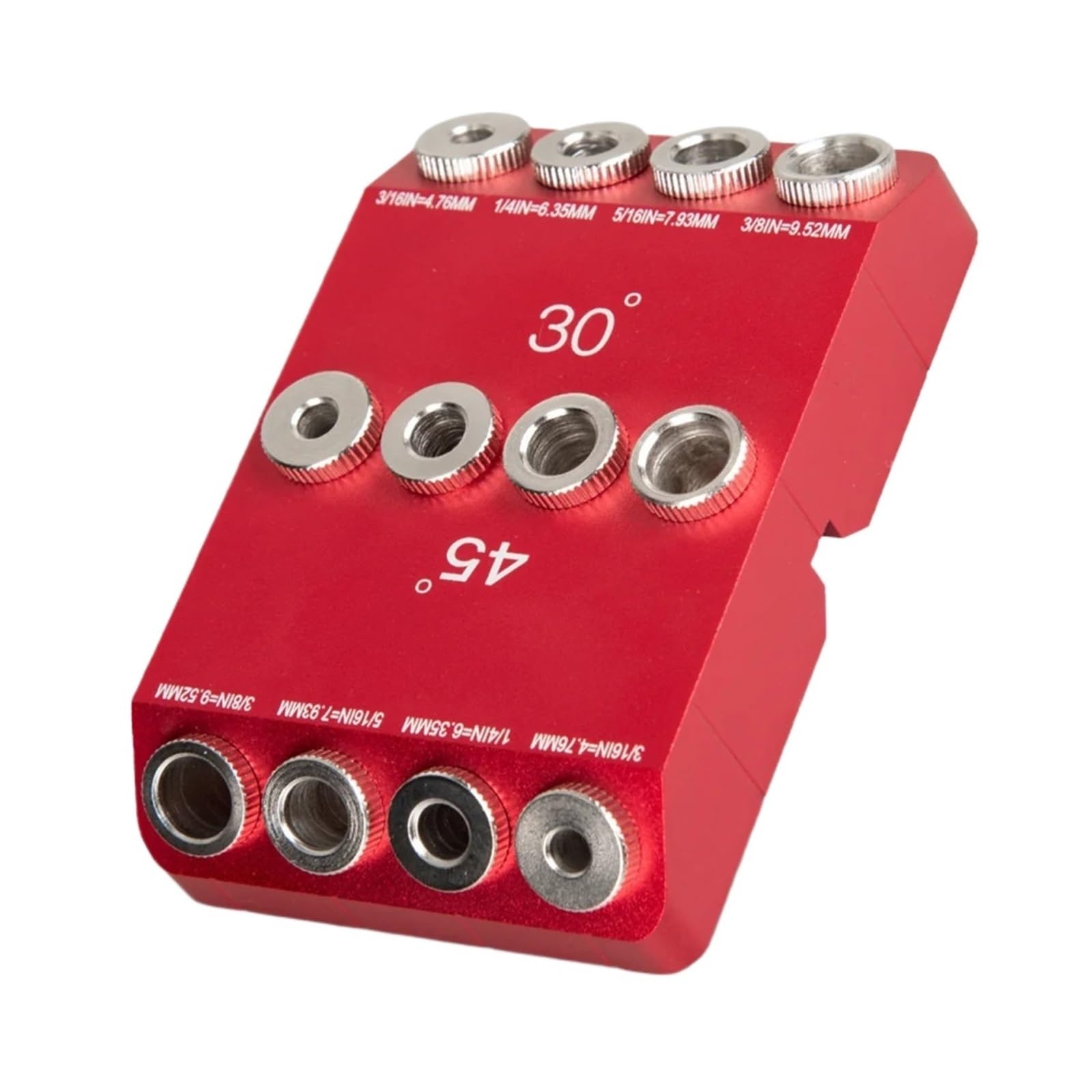
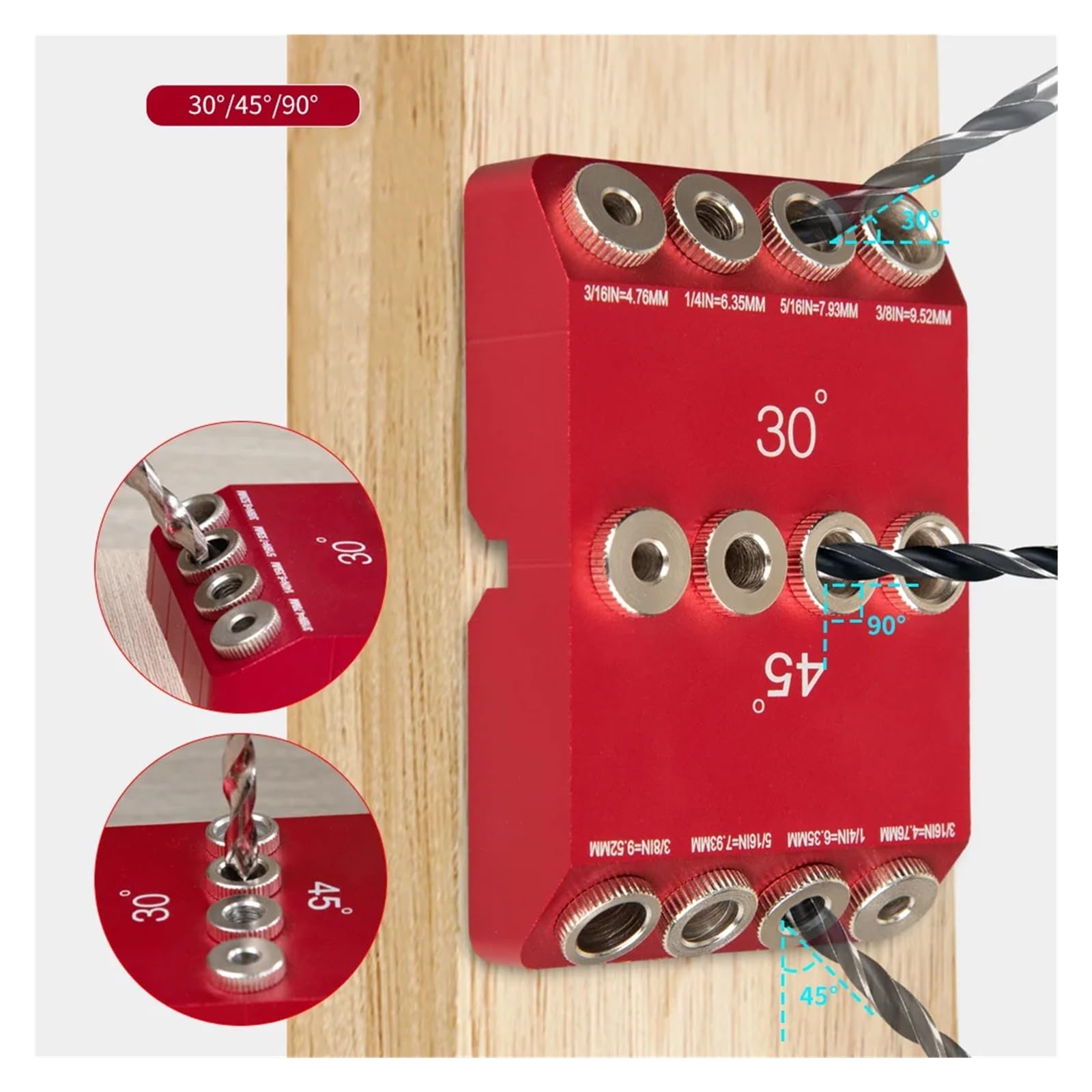
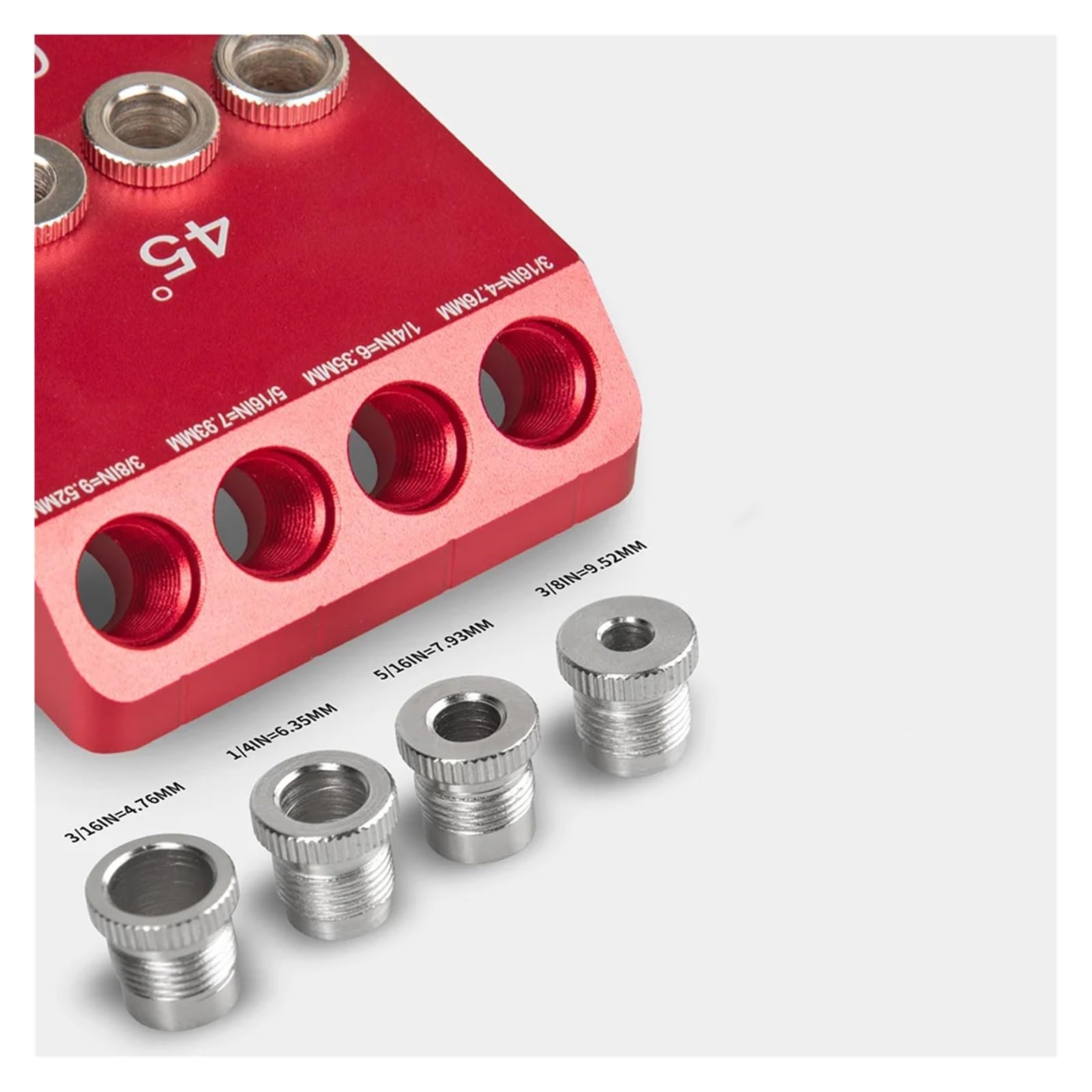
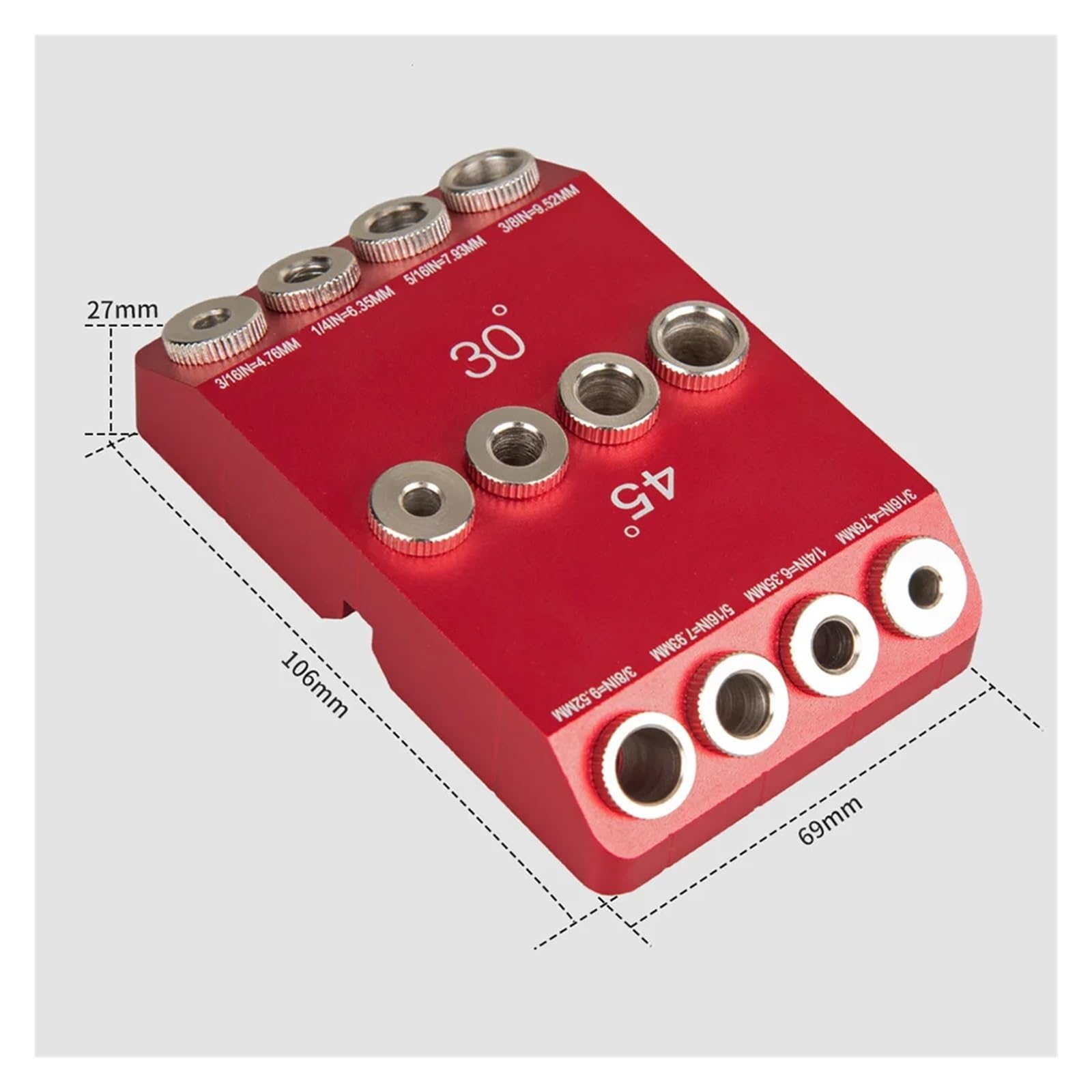
The body carries guide holes at 30°, 45° and 90°, with each angle marked directly on the aluminum. Every hole is labelled with its diameter — 3/16IN=4.76MM, 1/4IN=6.35MM, 5/16IN=7.93MM, 3/8IN=9.52MM — so you read the size off the tool instead of measuring the bit.

Hardened steel bushings, not bare aluminum
Each guide hole is lined with a hardened steel bushing. That is the part that matters: a drill bit spinning against bare aluminum opens the hole up within a few dozen uses, and once the bushing is loose the angle is no longer the angle. Steel sleeves resist that wear and keep the guide honest through hundreds of holes.

Flat on the work, square to the edge
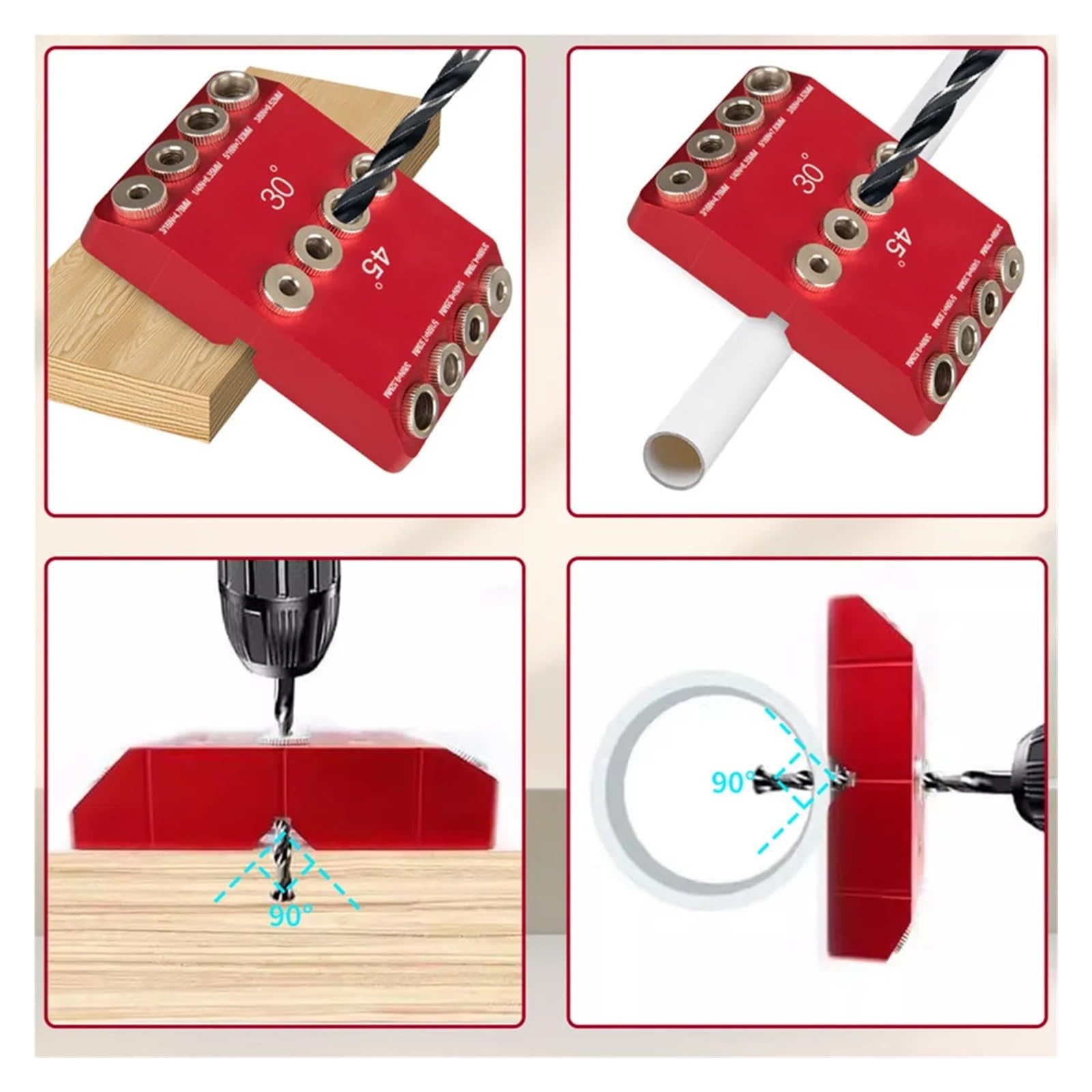
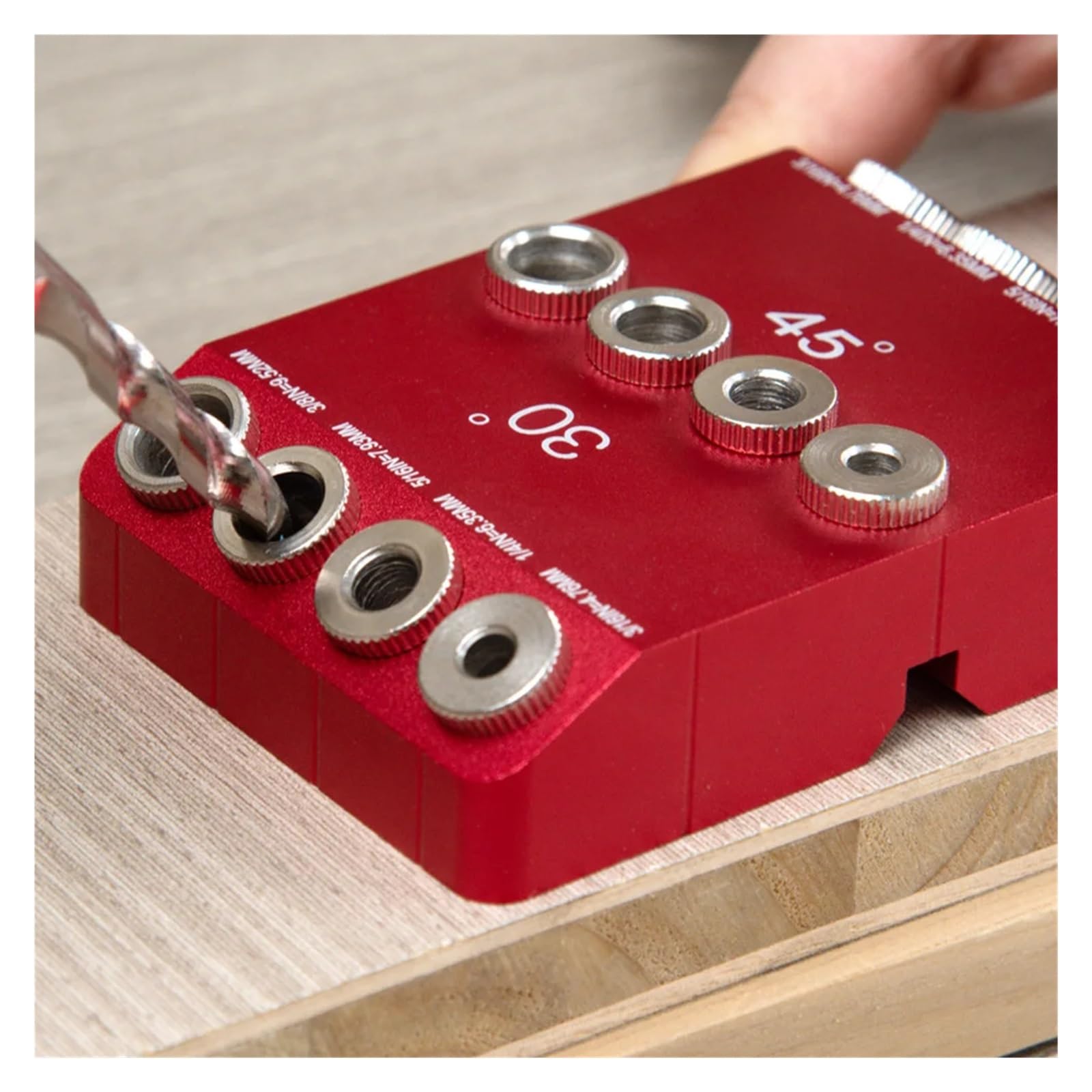
The block sits flat on the workpiece and registers against the edge, so the hole starts exactly where you positioned it. The anodized aluminum body is solid enough that it does not flex when you lean into the drill — flex is what pulls a bit off its intended line.
Hold the block down, run the bit through the bushing, and the angle is fixed for the whole depth of the cut. Repeat it on the next post and you get the same angle again.

Made for the jobs that need an angle
Deck cable railing is the obvious one — cable runs pass through posts at an angle on stairs, and every hole has to match or the cable binds. Guardrail posts, angled bolt holes, and through-holes in framing are the same problem: an angle you cannot eyeball and cannot easily jig up on a drill press.
It is a portable template, so the work does not have to come to the shop. The block goes to the deck, the railing, or the frame.

Pick the angle, pick the size, drill
- Set the block flat on the workpiece and register it against the edge
- Choose the marked face for the angle you need — 30°, 45° or 90°
- Choose the bushing that matches your bit: 3/16", 1/4", 5/16" or 3/8"
- Hold the block down and run the bit through the bushing to depth
- Move to the next hole or the next post — same angle, no re-setup